How Directional Drilling Works in South Florida Ground
Oolite: soft rock, hard lessons
The metro's bedrock is Miami oolite and the limestones beneath — young, soft, porous carbonate that a drill head cuts almost like dense soil. Footage comes easy; circulation doesn't. The rock's vugs and solution channels connect to a water table that sits within a few feet of grade, so drilling fluid has ready-made exits everywhere. The local skill hierarchy puts fluid management above steering: watch returns, stage lost-circulation materials, keep annular pressures conservative, and treat a sudden quiet in the returns as information, not luck.
Above the rock, surface soils run to clean sands and thin organics — easy digging that makes trenching genuinely competitive on open ground, which is why our trench-vs-bore honesty gets more use here than almost anywhere.
Drilling over the Biscayne
The Biscayne Aquifer is the metro's drinking water and a federally designated sole-source aquifer, lying shallow and unconfined under most of the urbanized coast. Practically, that makes every bore plan a water-protection document: containment at entry and exit, monitored returns, spill response staged, disposal handled clean, and lost-circulation response written down before the pilot starts. It's the local cost of doing business, and the contractors who treat it as culture rather than paperwork are the ones still working here in ten years.
The sequence, South Florida edition
Standard bones: 811 locates plus private designating, potholes on every crossing utility, pilot bore, reaming to roughly one and a half times product, pullback, restoration. The local bends: pits pump from the first bucket, duct gets ballasted on the pull, mud volumes carry lost-circulation reserve, salt-zone hardware east of the ridge, and restoration matches a landscape people photograph — because in this metro they do, and they post it.
Who owns what you're crossing
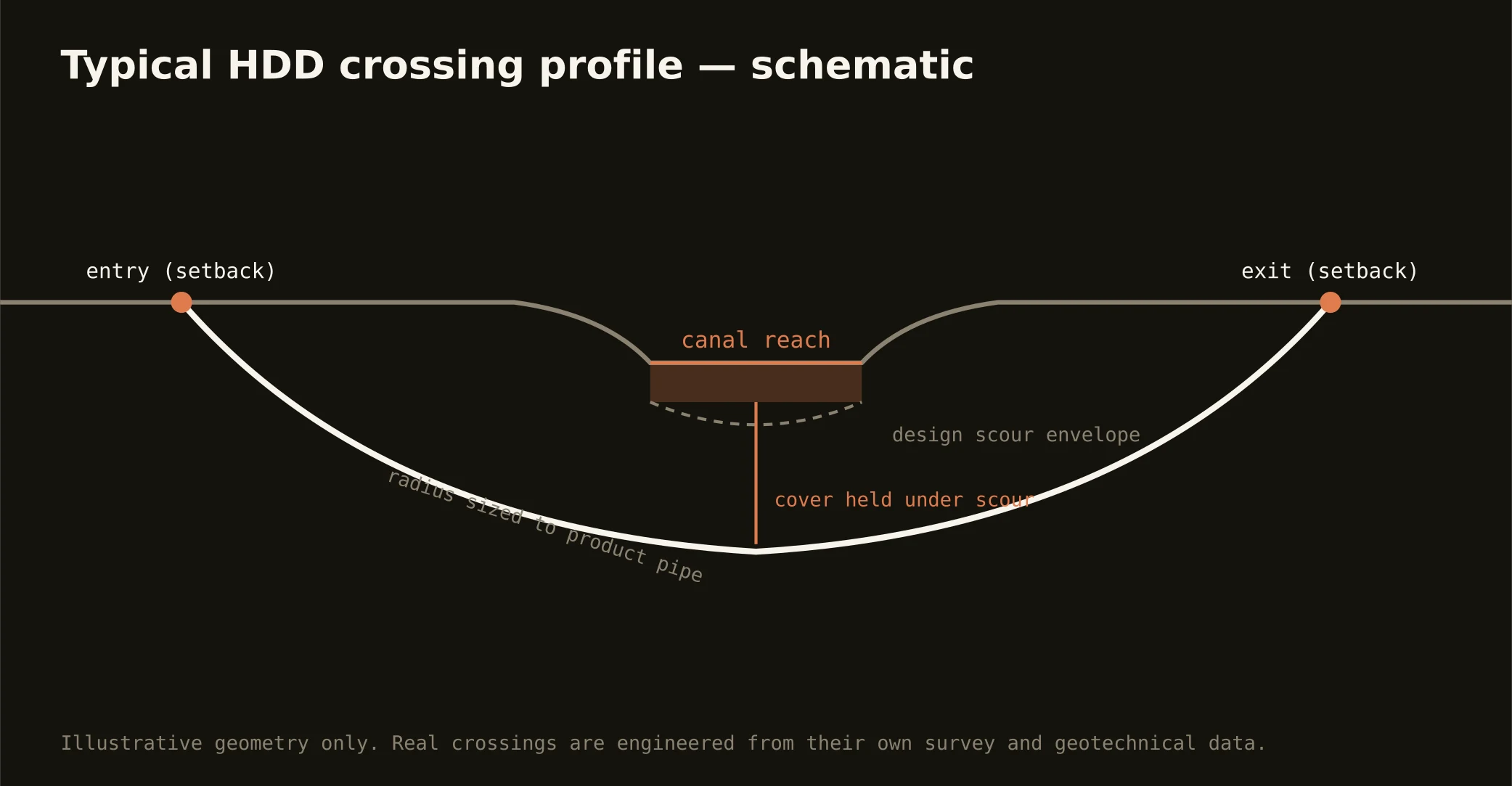
City streets belong to their municipalities — and this metro has dozens, each with its own ROW process. County roads run on Miami-Dade, Broward, or Palm Beach public works. The state system runs on FDOT's utility permit under its accommodation manual. Canals cross on the managing district's occupancy permit — the water management district on the primary system, local districts on the secondaries. Railroads permit their own corridors, including the busy coastal line. The quote names every owner your alignment touches; each one is schedule.
Straight answers
Is lost circulation dangerous?
The fluid is bentonite and water, so the hazard is environmental and civic rather than toxic — fluid where it doesn't belong, over an aquifer that supplies the coast. That's exactly why crossings here carry containment and a written response plan before the pilot starts, and why our crews treat returns monitoring as a full-time job.
How deep do bores run under South Florida streets?
Cover follows the owning authority's standard and sits below everything potholed on the alignment; canal crossings run to the district's criteria under the design section. The rock lets bores run efficient depths — the constraint is the water and the existing utilities, and the bore plan states your number.
Does the water table ever stop a bore?
It changes the bore, not the answer: pits get pumps and shoring, fluid gets managed harder, and buoyancy gets engineered on the pull. What the water table genuinely stops is careless work — which is the point of planning for it.
Ready to put a number on a real crossing? Send the scope — a person prices it.